Experienced Specialists
Consult with doctors experienced in diagnosis and treatment planning.

Interventional Cardiology is a subset of cardiology which utilizes minimal invasive procedures involving the use of catheters for the diagnosis and treatment of heart and blood vessel diseases. The advanced techniques assist in restoring blood flow, relieving symptoms and improving heart function through small cuts, less pain, quicker recovery and shorter stays in the hospital.
Our Interventional cardiologists at Epic International Hospitals offer expert care using the latest technology for heart diseases like coronary artery disease, blocked arteries, heart attacks, chest pain, peripheral artery disease and structural heart disease.
Consult with doctors experienced in diagnosis and treatment planning.
Investigation-led decisions through modern diagnostic pathways.
Selected procedures may be planned with efficient hospital stay strategy.
Insurance desk assistance for approvals and documentation workflow.
Interventional Cardiology is offered by the diagnosis-based approach which improves the health outcomes through symptom relief, comfort, and proper treatment with specialist help.
Ideal for patients who require specialist diagnosis and treatment plans
Treatment can involve medication, minimally invasive care, procedures, or surgeries based on the diagnosis
Depends on the condition of the patient and selected treatment option
Available at Epic International Hospitals, Banjara Hills, Hyderabad
Interventional Cardiology Service at Epic International Hospitals, Banjara Hills, Hyderabad is provided via specialist consultations, diagnosis, and customized treatment plans for each individual patient. Treatments could consist of medications, minimal invasive surgical techniques, or even surgery where required.
Explore the major Interventional Cardiology categories below. Each category groups the relevant treatment and procedure pages already published in the CMS.
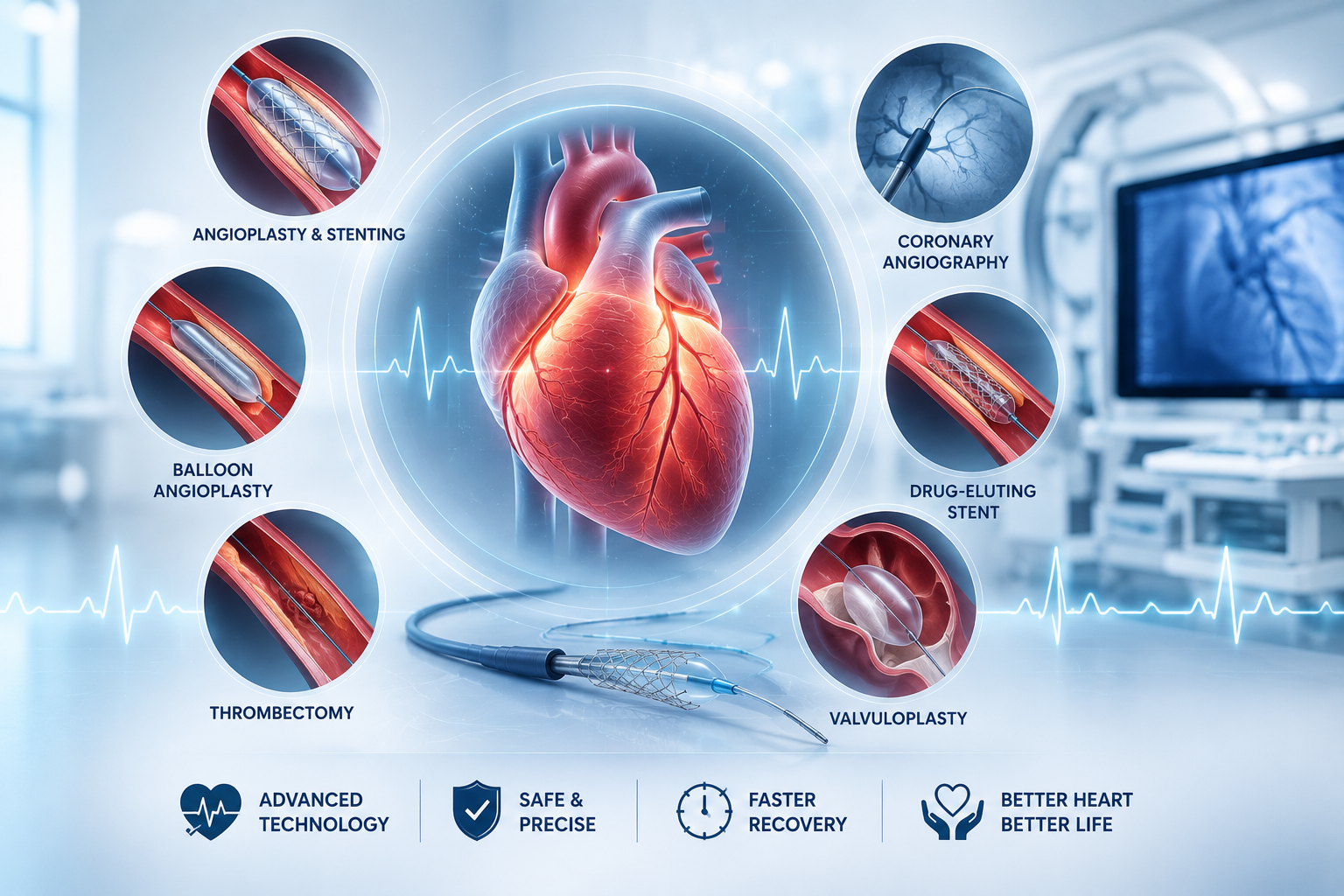
Structured pathways for diagnosis, treatment planning, and procedure access.
Treatment for coronary artery disease involves changing lifestyles, such as maintaining a healthy diet, exercising, and quitting smoking, along with medications like aspirin, statins, beta blockers, and nitrates to enhance blood circulation.
Myocardial Infarction treatment includes emergency restoration of blood flow using medicines (antiplatelets, thrombolytics), primary angioplasty with stent placement (PCI), and supportive care to prevent further heart damage and complications.
Structural Heart Disease treatments include minimally invasive and surgical procedures to correct defects in heart valves, chambers, or walls.
Hemodynamics and Diagnostic Procedures are various types of tests and imaging techniques that are performed to determine the blood flow, pressure and heart function which can help in the diagnosis of cardiovascular disease.
Heart Defects Interventions are non-invasive and surgical treatments that aim to fix congenital heart defects, such as holes in the heart, problems with valves, and other abnormalities in the blood vessels within the heart.
Advanced cardiovascular support procedures refer to critical care therapies administered to assist the heart and the circulatory system in patients suffering from acute cardiac disease, such as intra-aortic balloon pump (IABP), extracorporeal membrane oxygenation (ECMO), ventricular assist device (VAD), and mechanical circulatory support.
Interventional cardiology specializes in the treatment of conditions such as Coronary Artery Disease, myocardial infarction, vascular occlusions, heart valve disorders, congenital heart diseases, peripheral artery disease, and thrombus through minimally invasive techniques involving catheters.
The approach to Interventional Cardiology in Epic International Hospitals follows a process that involves specialist assessment, diagnosis-based planning, and treatment methods that are easy on the patients. The aim is to establish the disease early, determine its severity, and apply the right treatment method.
Clinical signs that can prompt interventional cardiologists to treat patients may depend on several factors such as diagnosis, phase, and coexisting diseases. Symptoms, discomfort, or dysfunction caused by symptoms
Physical appearance or permanence of the clinical sign
Edema, tiredness, or aggravation of the clinical sign during physical activity
Recurrence despite standard self-management practices
Impact on quality of life when performing daily tasks
Causes and Risk Factors will vary depending on the actual diagnosis
These facts explain the importance of a timely consultation with the appropriate specialist for the patient.
Common Causes
Pathological process leading to the disease of the targeted organ/system
Late diagnosis and treatment
Pathophysiological disorders
Stress to the affected area caused by lifestyle/workload
Risk Factors
Patient’s age, family history, and presence of comorbid conditions
Prolonged sedentary lifestyle/stress to body systems
Previous episodes of diseases
Medications noncompliance and untreated signs of the disease
The condition can further deteriorate, recur, or cause complications that could have been avoided with proper and prompt assessment.
Presence of continuous symptoms
Worsening of the illness or development of a localized complication
More complex therapy required as a result of neglect
Additional visits to the hospital, infections, hemorrhaging, or pain flare-ups, among others
Don't wait for the symptoms to worsen. Referral to a specialist should be considered in case of persistent, recurring, or worsening symptoms.
Symptoms persist in spite of initial treatment over a few days
Recurrent or worsening symptom pattern
New onset of pain, swelling, fever, bleeding, or decreased tolerance for activity
Diagnosis begins with specialist consultation, review of symptoms, examination, and specific investigations based on clinical findings.
Specialist consultation and physical examination
Blood tests and baseline investigations
Ultrasound, X-ray, CT scan, MRI, or endoscopy if required by clinical findings
Biopsy or further analysis if required for confirmation
The treatment is individualized. The ultimate approach will depend on the diagnostic results, severity, co-morbid conditions, previous experience with treatments, and treatment objectives.
Pharmacological management and symptom control where applicable
Minimally-invasive or day-care treatment in select cases
Procedural or surgical treatment where necessary
At Epic International Hospitals, care is normally offered following a standardized clinical process for the patients to be aware of each step.
Appointment booking via phone or online application.
Consultation with the specialist and discussion of symptoms and medical history.
Diagnosis and test where clinically necessary.
Treatment plan with risks and benefits discussed.
Depending on the particular diagnosis and chosen method of treatment, the desired outcomes will vary, but the general objectives will be the following:
Symptom relief and improved quality of life
Improved functional mobility where applicable
Prevention of progression and related complications
Long-term care management under the guidance of a specialist
Quick recovery in certain minimally invasive cases
Recovery depends on the diagnosis, type of treatment, and overall health condition. Your physician will give you a customized recovery and follow-up program.
Observe your diet, fluid intake, and activity guidelines from the healthcare providers
Gradually return to work and exercise as recommended
Seek medical attention promptly in case of any symptoms such as fever, increased pain, bleeding, or breathing problems



Epic International Hospitals supports interventional cardiology care through specialist-led treatment planning, coordinated diagnostics, and patient-friendly follow-up workflows.
Cost depends on diagnosis complexity, condition severity, investigations, treatment type, hospital stay duration, medicines, and insurance coverage conditions.
For accurate planning, request a personalized estimate after specialist consultation and test review.
Insurance and cashless support may be available based on policy terms, hospital empanelment, and insurer approval.
Epic International Hospitals in Banjara Hills, Hyderabad offers consultation, diagnosis, and treatment planning for interventional cardiology with specialist support.
Patients commonly reach the hospital from nearby areas including Jubilee Hills, Ameerpet, Punjagutta, Mehdipatnam, Somajiguda, and other parts of Hyderabad.
No related blog articles are published for this specialty yet.
Connect with our care team for specialist consultation, diagnosis support, and treatment planning.
This information is for general awareness only and should not replace medical consultation. Please consult a qualified doctor for diagnosis and treatment advice.